
Managing medications at home is one of the most important things you can do for a senior pet’s comfort. This guide covers the most common medication types and how to administer them with the least stress for your pet.
- Pills and capsules: Hide in a soft treat, use a pill pocket, or ask us about compounding into a flavored chewable.
- Liquids: Use the syringe provided; aim for the cheek pouch rather than the throat.
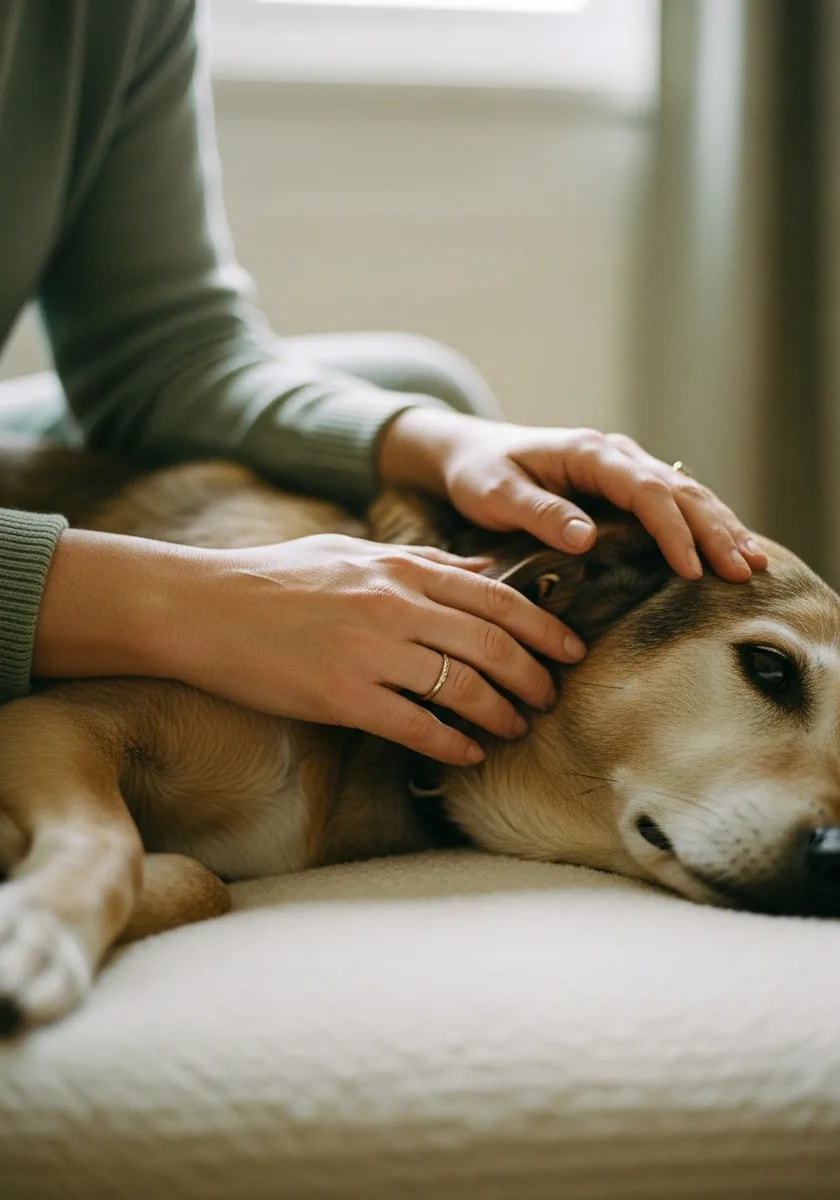
- Transdermal gels: Applied to the inner ear flap — rotate between ears daily and wash your hands thoroughly after.
Keep a simple log of each dose with the time given. This helps catch missed doses early and gives us useful data at check-ins.
If your pet refuses medications or you notice vomiting, lethargy, or changes in appetite after starting a new drug, call us before the next scheduled dose.